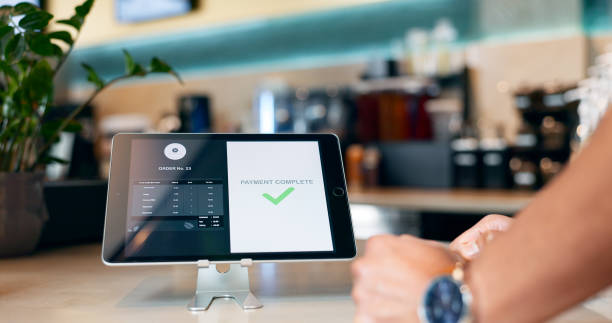
Walk into any busy kirana store or restaurant in Trichy during peak hours and you’ll notice something interesting: the businesses that move fastest through billing queues are almost never the ones still writing receipts by hand or punching numbers into a basic calculator. They’re running on point-of-sale systems that handle billing, stock updates and payment tracking in the same few seconds it takes to scan a barcode.
For years, point-of-sale technology was seen as something only large supermarket chains needed. That perception has changed rapidly. Small and mid-sized retailers, pharmacies, restaurants and even standalone kiosks across Trichy are adopting POS systems, not because it’s trendy, but because manual billing has quietly been costing them money in ways that are easy to overlook.
The Hidden Losses of Manual Billing
When billing is done manually, errors creep in constantly, a wrong price entered here, a discount miscalculated there, a return not recorded properly. Individually these mistakes seem minor, but across hundreds of transactions a month, they add up to real revenue leakage. Worse, manual systems make it nearly impossible to track which products are actually selling well, leaving owners to restock based on guesswork rather than data.
There’s also the customer experience to consider. Long billing queues during peak hours frustrate customers, and in a market with plenty of alternatives nearby, frustration translates directly into lost repeat business. Speed at the counter has become a quiet competitive advantage.
What a Modern POS System Actually Does
A good point-of-sale system does far more than print a receipt. It updates inventory in real time with every sale, tracks which items are moving fast and which are gathering dust, generates daily and monthly sales reports automatically, and integrates with digital payment methods that customers increasingly expect. Many systems also support multiple store locations from a single dashboard, which matters a great deal for businesses planning to expand.
For restaurants specifically, POS systems can manage table orders, kitchen display tickets and split billing, cutting down on the confusion that comes with juggling paper order slips during a rush.
Why Local Retailers Are Investing Now
The shift toward digital payments has made POS adoption almost unavoidable. Customers now expect to pay by UPI or card as easily as cash, and reconciling these payments manually against a paper ledger is a recipe for errors and disputes. A properly built system settles this automatically, giving owners a clear, accurate picture of daily earnings without hours of manual tallying at closing time.
This is where working with a dedicated POS Software Development Company in Trichy makes a real difference. Off-the-shelf software built for a generic market often doesn’t account for the specific billing formats, tax structures, or regional payment habits that local businesses deal with daily. A custom-built or locally adapted system fits the actual workflow of the business rather than forcing the business to adapt to the software.
Choosing the Right Fit for Your Business
Not every business needs the same features. A pharmacy needs batch and expiry tracking built into its billing flow, a boutique needs variant tracking for size and colour, and a restaurant needs table and order management. This is exactly why generic, one-size-fits-all POS software often ends up underused, with business owners paying for features they never touch while missing the ones they actually need.
The right approach is to sit down with a technology partner, map out the actual daily billing and stock workflow, and build or configure a system around that reality rather than forcing a rigid template onto the business.
Looking Ahead
Retail in Trichy is becoming more competitive every year, with new stores opening and customer expectations rising steadily. Businesses that continue relying on manual billing are, in effect, competing with one hand tied behind their back, spending time on paperwork that could be spent serving customers or growing the business.
Partnering with a capable POS Software Development Company in Trichy isn’t just a technology upgrade, it’s an operational decision that pays for itself through fewer errors, faster service and clearer financial visibility. For any retailer or restaurant owner still on the fence, the honest question worth asking is not whether a POS system is worth it, but how much longer they can afford to wait.
What to Expect During Setup
One reason owners hesitate is the assumption that switching to a POS system means shutting the shop for days while everything gets configured. In reality, a well-planned rollout can happen with minimal disruption, often running the new system alongside the old billing method for a short overlap period so staff get comfortable before fully switching over. Product catalogues and pricing can be loaded in bulk rather than entered one item at a time, which speeds things up considerably for stores with large inventories.
Staff training is usually the part owners worry about most, especially with employees who aren’t particularly comfortable with technology. Most modern POS interfaces are designed to be simpler than a traditional cash register once you get past the first day, since barcode scanning and touch-based menus remove much of the manual calculation that used to slow billing down. Within a week or two, most staff find the new process faster and less error-prone than what they were doing before, which tends to win over even the most reluctant team members.
A Quick Final Thought
It’s worth remembering that a POS system isn’t really a single purchase decision, it’s an ongoing relationship with a technology partner who understands how your specific business sells, prices and restocks. The businesses that get the most long-term value tend to pick a partner willing to make small adjustments as the business evolves, rather than a rigid, one-time installation that never changes again.